Technical Bottlenecks in Case-Bound Ultra-Thin Bible Production: Process Difficulty and Capacity Analysis
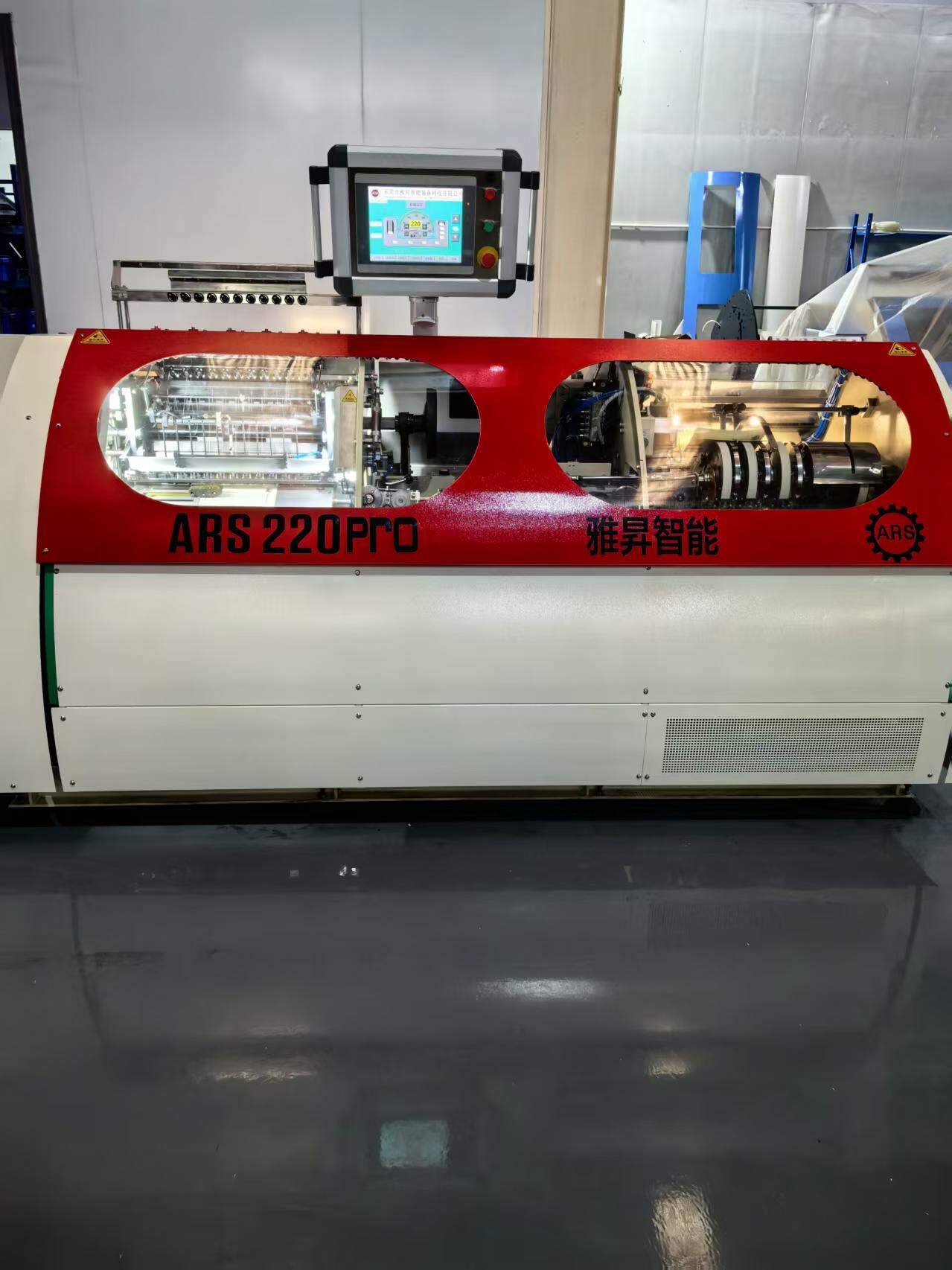
I have spent years on bindery floors running Smyth-sewing lines for Bibles, prayer books, and multilingual liturgical editions. If there is one material class that exposes every weakness in a case-binding plant, it is ultra-thin Bible paper—commonly 28–40 gsm. The paper is engineered for opacity and bulk reduction, but on the post-press side it behaves unlike any normal book stock.
1. Paper behavior sets the ceiling
Ultra-thin paper has very low stiffness. It cannot absorb tension fluctuation, transport shock, or feeder aggression. In sheeting and web handling, 28–60 gsm Bible grades readily show wrinkles, waves, edge tightening, and web breaks when tension is too high or unstable. In finishing, the same sensitivity appears as tear at the fold, drag marks under the knife, double-sheet pickup in gathering, and needle-hole bursting in sewing. Climate also matters: thin paper reacts quickly to humidity change and static, so a line that runs clean at 50% RH can drift badly at 60%.
For case-bound Bibles, the problem is compounded by book architecture. A 1,200-page edition on 28 gsm may still require Smyth sewing for lay-flat durability and longevity; but the thinner the signature, the less tolerance there is for over-clamping, over-tensioning, or blunt needles.
2. Gathering and signature separation
The first bottleneck is not the sewing head—it is getting one signature, and only one, into the sewing saddle. Thin sections curl, stick, and aerodynamically couple. Fixed suction settings that work on 80 gsm text stock will either starve the feeder on Bible paper or double-feed it. Blown-air separation that creates an air cushion between adjacent sections is the practical countermeasure; it reduces double-pickup and surface scratch before the sheet reaches the saddle. In mixed Bible blocks—28 gsm body plus heavier endpaper or insert—caliper-based adaptive feeding is preferable to fixed recipes, because the transient from thin body to board-weight endpaper is exactly where standard feeders mistime.
3. Sewing tension, needle geometry, and stitch quality
Once in the saddle, three variables decide yield: clamp pressure, thread tension, and needle penetration. Thin paper rewards low, stable tension rather than high tension corrected after the fact. Over-tension produces puckering and signature cockling; under-tension produces loose stitches and poor spine lock. Needle selection is equally critical—short straight and hook needles reduce penetration force and broken/bent-needle incidents, while tapered bottoms produce smaller, even holes and limit fiber tear. On 28 gsm, hook timing, thread count, and saddle registration must be tighter than on 80–90 gsm text; otherwise skipped stitches appear and the book block fails collation or pull tests.
Graphic collation inspection should sit upstream of or inside the sewing node for multilingual Bibles. Scanning one reference book and comparing every signature in real time catches missing, duplicated, or wrong-sequence sections before they are locked in thread—far cheaper than discovering misfits at casing-in.
4. Book-block consolidation before casing-in
Sewn Bible blocks on thin paper often spring back after sewing because the paper has little compressive memory. If the block goes to pressing or casing-in without controlled consolidation, round-back formation, hinge adhesion, and joint squareness suffer. Pre-pressing or calibrated nipping reduces lock-sewing setup variability and improves downstream glue and case registration. On long Bible runs this is a capacity issue as much as a quality issue: an unstable block forces slower casing-in, more touch-up, and higher reject cost on high-retail SKUs.
5. Capacity math and where lines stall
A realistic case-bound Bible line should be modeled by station takt, not by nominal machine speed. Suppose gathering feeds at 150 signatures/min, sewing is capable at 150–160 signatures/min on thin stock with optimized setup, pressing/nipping adds cycle time, and casing-in runs at a lower books/min because each block must be squared, glued, and jacketed. The sewing head is rarely the sole constraint; the system constraint is usually thin-paper feeding stability plus post-sew consolidation.
Manual lines typically lose time in three places: feeder operator adjustment per paper lot, visual collation checks, and reprocessing sprung blocks. Automated make-ready—input book size and signature count, machine self-positions feed wheel, stitch pitch, clamp, and speed—removes most manual reset. Storing common sewing recipes further shortens changeover for repeat Bible formats. On 28 gsm, an adaptive-speed sewing node can hold near-continuous throughput that a fixed-tension machine cannot, because it micro-adjusts to caliper variation instead of slowing for operator correction.
6. Practical specification for an ultra-thin Bible sewing node
For plants targeting serious Bible volume, I recommend evaluating sewing equipment against these minimums:
- Capable, stable thin-paper speed—e.g., vendor-demonstrated 28 gsm at 150 spm for an ARS-class 180C configuration, or 160 spm on larger ARS-class nodes—validated on your actual paper, not brochure paper
- Air-cushion separation and caliper-responsive feed to suppress double-sheet
- Short needle set plus adjustable, stable thread tension; automatic central lubrication with alarm/stop on failure
- Graphic fingerprint or barcode collation check for multilingual blocks
- Auto-make-ready with stored recipes; bilingual/icon HMI to reduce operator dependence
- Data logging of speed, faults, tension alarms, and output for traceability under modern EU machinery expectations such as Regulation 2023/1230 digital records
7. Bottom line
Ultra-thin Bible case binding fails most often not because sewing is slow, but because thin paper amplifies every imprecise setting across gathering, sewing, pressing, and casing-in. The plants that win are those that treat the sewing node as a closed-loop quality station—adaptive feeding, stable low tension, short needles, vision collation, and logged parameters—rather than as a standalone high-speed machine. Done correctly, 28 gsm Bibles move from "expert-operator-only" work to repeatable scheduled production, and case-binding capacity becomes predictable instead of heroic.
Tags
Share This Article
Need Help Choosing Equipment?
Our technical experts can provide personalized recommendations based on your specific production requirements and budget.
Contact Our Team