Mixed-Line vs. Dedicated-Line in Book & Premium Notebook Binding: An Expert Analysis
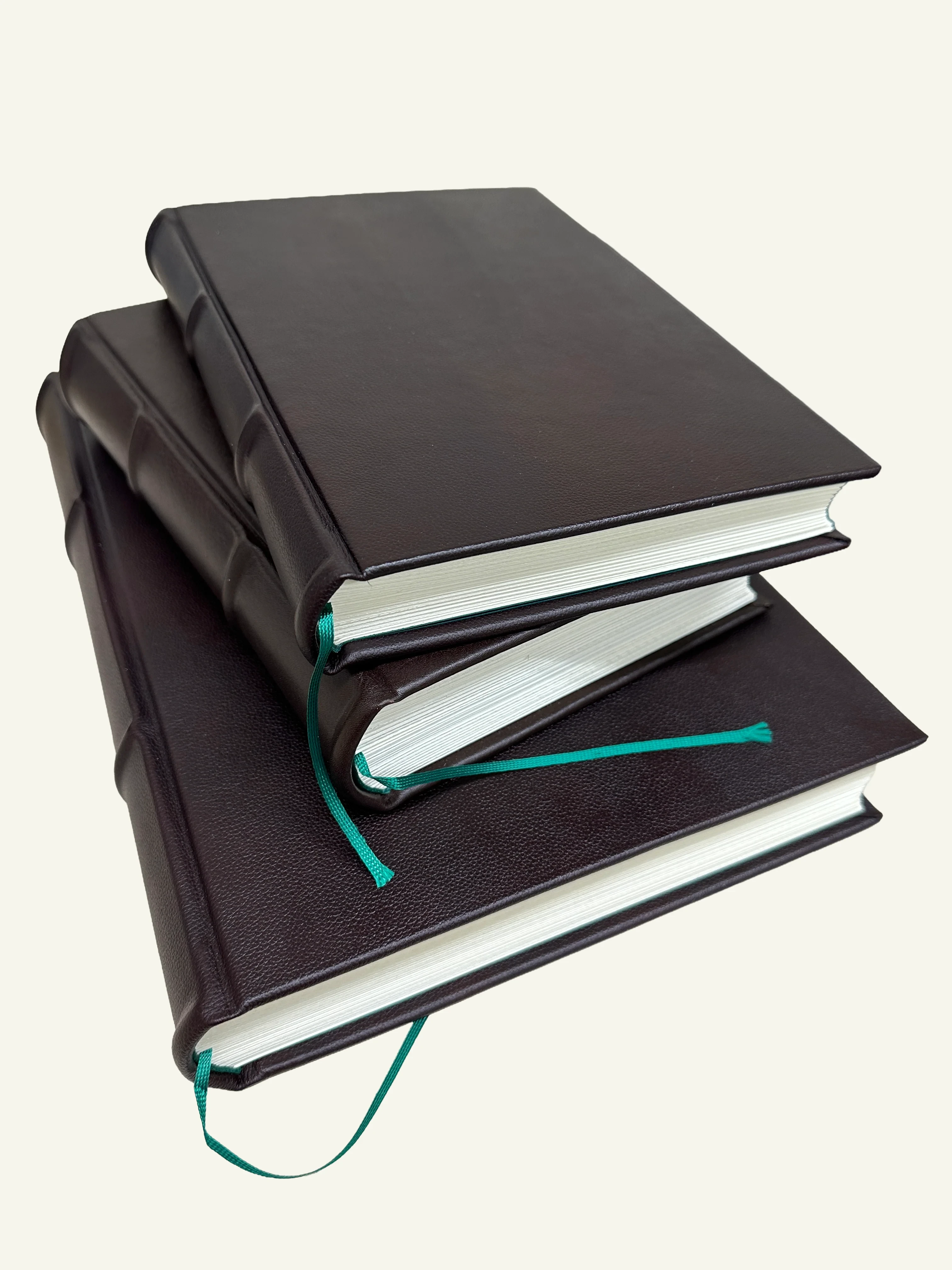
Having spent two decades on bindery floors—from Bible printers in the Netherlands to notebook ODMs in Northern Italy—I've seen both models succeed and both fail. The question isn't "which is better?" It's "which fits your order profile?" Let's break it down across the five dimensions that actually determine ROI.
1. Capacity: Throughput vs. Flexibility
Dedicated lines win on raw throughput. A purpose-built case-binding line running one SKU can sustain 60+ books/minute with minimal variance. But the modern market punishes rigidity. Over 65% of printers report that finishing can't keep pace with digital press output, forcing them to slow down the front end and extend payback periods.
Mixed-line (modular) setups sacrifice 10–15% peak speed for the ability to switch formats in under an hour. Meccanotecnica's 2026 Book Your Future demonstrations proved a single automated unit can produce either case-bound book blocks or perfect-bound finished books in one flow. For shops running 50+ SKUs monthly, that flexibility trumps raw speed every time.
2. Order Structure: The Deciding Factor
This is where the choice becomes clear:
- Long-run, single-format (50,000+ copies): Dedicated line. Lower unit cost, amortized setup.
- Short-run, multi-format (under 3,000, frequent changeovers): Modular mixed-line. HP's smart binding unit cuts changeover to 45 seconds—70% faster than legacy. Fujifilm's automated solutions hold 85+ books/minute on runs under 2,000 with less than 0.3% defects.
The global binding machine market (CAGR 6.11%) is shifting toward automation precisely because on-demand and self-publishing demand this flexibility. A fully automatic PUR binder inline with digital presses now handles 500+ cycles/hour, cutting per-book labor by up to one-third.
3. Floor Layout: Space as Currency
Dedicated lines are linear—folding → gathering → sewing → casing-in → trimming—each station a silo. They consume 12+ square meters and lock you into one product path.
Modular mixed-lines compress this dramatically. One automated book-making robot replaced a three-machine relay (printing, binding, cutting) in under 2m², delivering 13x faster turnaround (120 seconds vs. 27 minutes). For European urban binderies where floor rent runs €200–400/m²/year, footprint is a P&L line, not a footnote.
The ARS automatic thread sewing machine fits both models. At 6.144 CBM and 2,500 kg, it slots into a dedicated case-binding line as the sewing node, or stands alone as a modular station feeding downstream casing-in. Its 11-needle duplex head doubles Bible-line throughput—critical when a single liturgical SKU clears 50,000 copies.
4. Energy Utilization: The Hidden Cost
This is where most analysis falls short. Shanghai Zhonghua's centralized positive/negative pressure system replaced high-energy composite vacuum pumps: electricity dropped 57% over 4,400 operating hours, saving ¥379K annually. Their post-press automation (auto-packers, stacking, jointing) reduced staffing by 14 while cutting labor costs ¥800K.
Vacuum pumps are the dirty secret of binding—they're energy hogs and heat generators. ARS's imported vacuum generators replace traditional air pumps entirely: no heat buildup, no energy waste, 24/7 operation without maintenance. In a mixed-line scenario where equipment runs intermittently, this matters less. In a dedicated 24/7 Bible line, it's the difference between profit and loss.
5. Labor: The Existential Threat
EU printing employment fell 14.8% (2018–2022). Skilled sewing operators are retiring faster than apprentices arrive. Zhonghua's Bindery reduced headcount by 14 while increasing capacity. Beijing Zhonghua Commercial's post-press packaging line cut 9-person crews to 5, raising per-shift output 27.2% and per-capita output 1.3x.
Dedicated lines still need operators at each station—they just need fewer of them. Modular lines aim for "one supervisor, multiple machines." The ARS series embodies this: Mitsubishi PLC with 360° touchscreen, auto-adjusting feed wheel for mixed-thickness signatures (28 gsm Bible paper through notebook stock), graphic fingerprint vision that catches wrong-page errors in real time. One operator supervises what used to take three.
The Mixed-Line Lock: Locking in the Sewing Node
Here's the industry's dirty secret: gathering and casing-in are already heavily automated. The sewing station is where "mixed-line" claims stall. Bible paper tears on fixed tension. Mixed-thickness notebook orders confuse standard feeders. Wrong-page detection in multilingual Bibles still gets human eyeballs in most EU shops.
ARS solves this bottleneck. Its adaptive speed program + auto-adjusting feed wheel handle 28 gsm → notebook stock in one uninterrupted run. The 11-needle duplex head at 150–220 signatures/minute means you don't sacrifice throughput to get flexibility. And the CE-ready architecture (Mitsubishi + Schneider) drops into existing Kolbus or Müller Martini line protocols without retrofit fights.
My Recommendation
For European binderies, the winning 2026–2030 model isn't pure dedicated or pure mixed—it's hybrid:
- Dedicated core for your highest-volume SKU class (e.g., Bible production at 50K+ runs): ARS 220Pro at 220 spm, duplex, inline with Kolbus casing-in
- Modular mixed-line for short-run case-bound and premium notebooks: ARS 180Plus with quick-change tooling, JDF-driven recipes, vision inspection
- Shared services: centralized vacuum (energy), remote diagnostics (labor), MES integration (visibility)
This hybrid captures dedicated-line economics on your bread-and-butter while preserving mixed-line agility for the growing short-run, personalized segment. The ARS sewing node—with its adaptive feeding, vision collation check, and CE-ready controls—is the lowest-risk entry point for this transition because stitch quality is binary: pass or fail, no subjectivity.
Shops that try to go 100% dedicated will choke on short-run orders. Shops that go 100% mixed will lose margin on volume work. The hybrid, anchored by a smart sewing node, is how European binderies will survive the labor cliff and thrive in the premiumization era.
Tags
Share This Article
Need Help Choosing Equipment?
Our technical experts can provide personalized recommendations based on your specific production requirements and budget.
Contact Our Team