AI Robots in Book Manufacturing: A Quick Overview
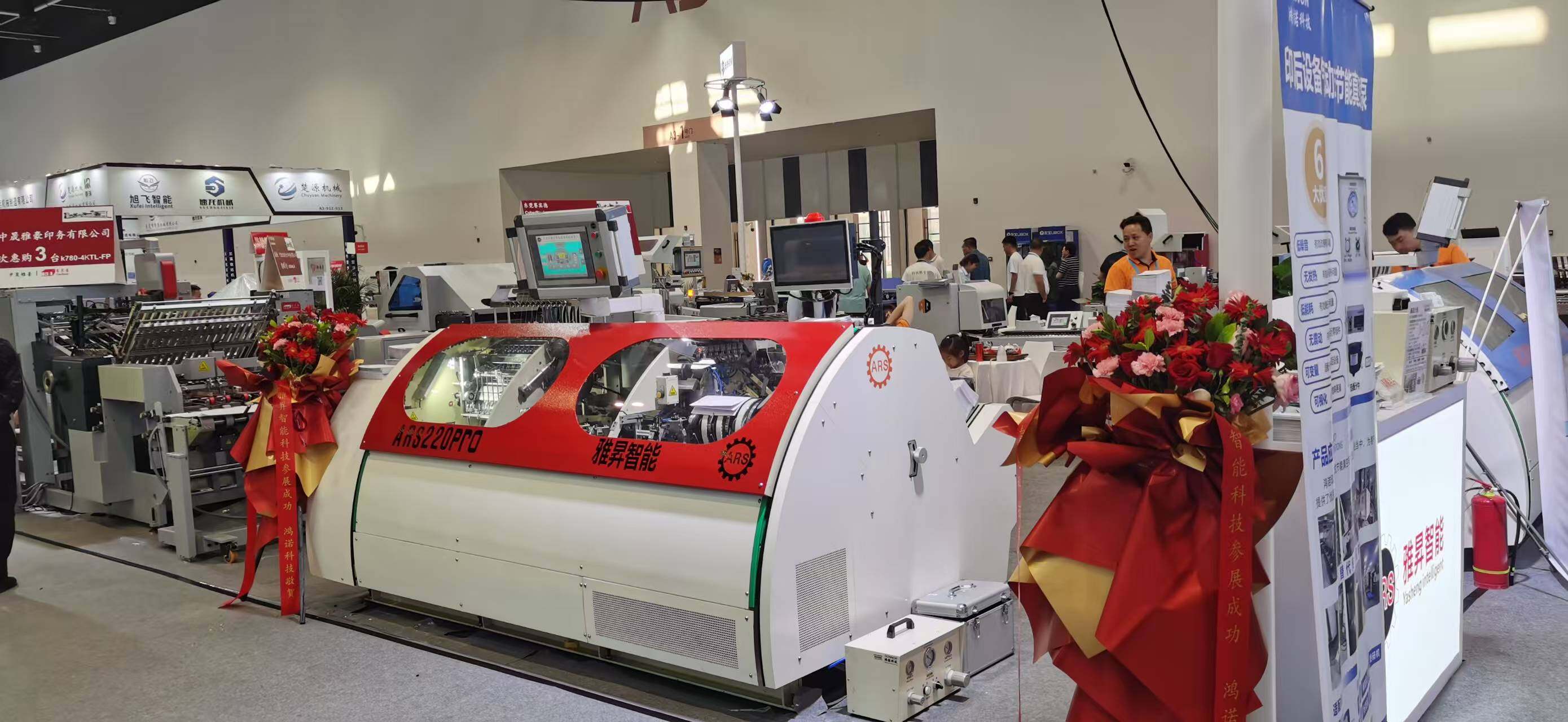
From my years on the shop floor, here's where AI and robotics are actually making a difference in book production today.
Material Handling
AGVs and robotic arms now move paper stacks and signature bundles between departments. No more forklifts or manual carts. Robots do the heavy lifting, freeing people for quality work.
Folding & Gathering
Robotic stackers at folder exits bundle signatures automatically—one operator can manage three high-speed folders. Auto-feeding robots replace the most labor-intensive job in gathering sections, eliminating misfeeds and wrong signatures.
Sewing & Binding Core
This is where AI shines. Vision systems scan every incoming signature, compare it to a stored "fingerprint" from a sample book, and catch wrong pages or upside-down sheets in milliseconds. Thickness sensors adjust machine speed and feed wheel height on the fly—no more broken needles from thick-thin variation. Stitch tension is monitored in real time.
Case Binding & Perfect Binding
Collaborative robots (cobots) load book blocks into glue stations and remove finished copies. They're easy to program, take little space, and don't need specialist engineers. Spine forming, ribbon attaching, and cover positioning are also getting robot-assisted.
Inspection & Packaging
Inline cameras check every book for alignment, missing pages, and cover position. Dynamic weighing flags anything off-spec. Robotic arms sort good books by title onto pallets—no human sorter needed.
Bottom Line
AI robots do three things in book manufacturing: move stuff (AGVs/arms), look for defects (vision/AI), and replace boring jobs (cobots). When you connect all three into one line, you get stable output, lower cost, and fewer customer complaints. That's the real win.
Tags
Share This Article
Need Help Choosing Equipment?
Our technical experts can provide personalized recommendations based on your specific production requirements and budget.
Contact Our Team