Agile Binding in the Short-Run Era: Operational Advantages of the ARS 180 C Entry-Level Sewing Machine
Abstract
The European book manufacturing sector is undergoing a structural transformation characterized by shrinking print runs, increased product customization, and the rapid adoption of hybrid binding lines. In this high-mix, low-volume environment, traditional heavy-duty binding equipment often proves too rigid and labor-intensive. This paper analyzes the operational advantages of the ARS 180 C entry-level automatic sewing machine, demonstrating how its recipe management system, automated make-ready functions, and operator-centric hardware design provide a strategic solution for cost-effective, agile short-run production.
1. The Short-Run Imperative in Modern Bookbinding
The economics of traditional bookbinding relied on long production runs to amortize extensive setup times. However, current market dynamics—driven by print-on-demand (POD), self-publishing, and specialized religious texts (e.g., ultra-thin Bible stock)—demand extreme flexibility. For hybrid binderies, the bottleneck has shifted from pure throughput speed to changeover speed. Equipment must seamlessly transition between varying book sizes, paper thicknesses, and stitch patterns within minutes rather than hours. The ARS 180 C is engineered specifically to address this operational bottleneck.
2. Digital Recipe Management: Eliminating Setup Variability
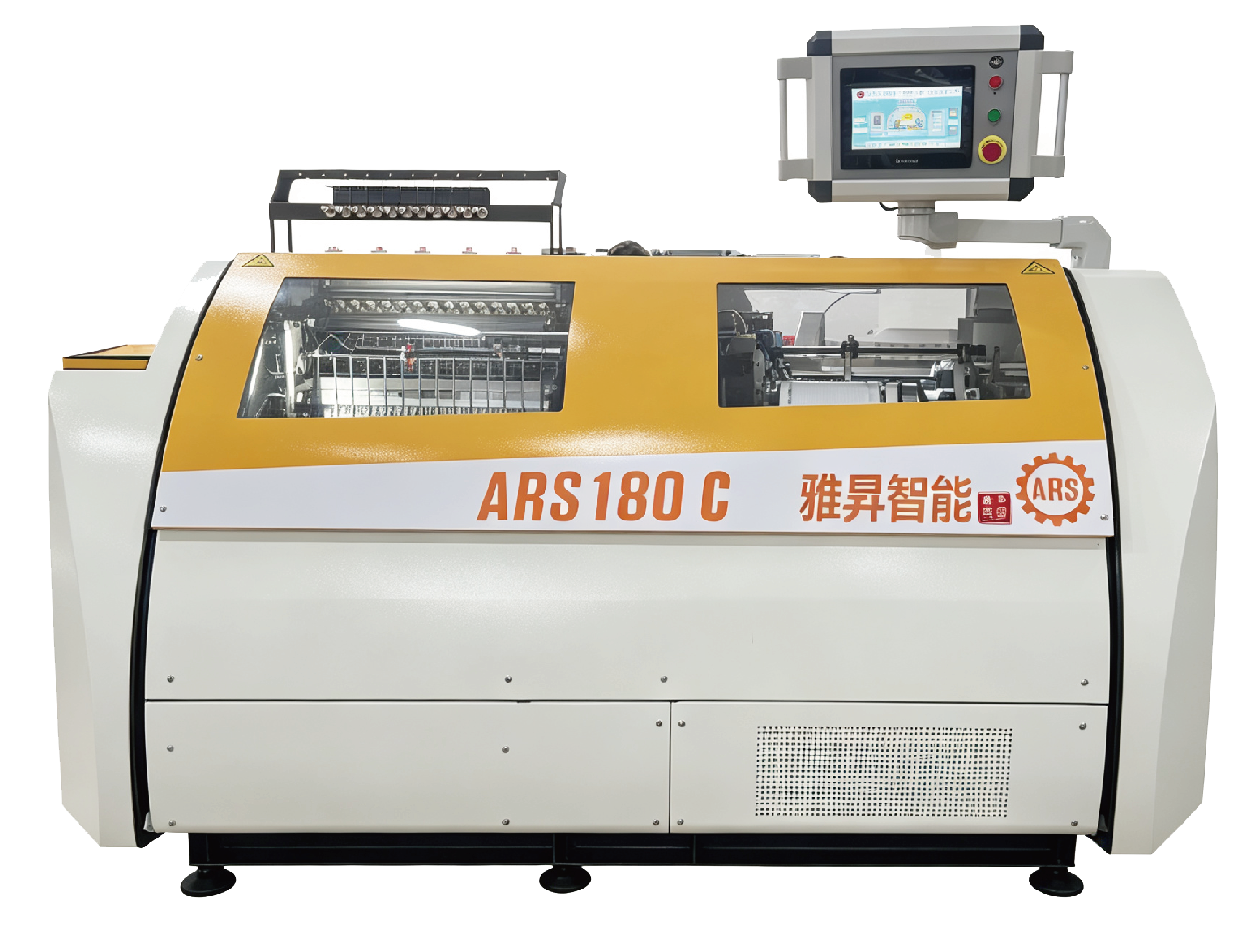
A core innovation of the ARS 180 C is its integration with a Mitsubishi PLC control system, which enables advanced digital recipe management. The system can store up to 20 distinct sewing programs.
In a conventional binding line, changing a job requires manual recalibration of feed wheels, stitch pitch, and tension settings, relying heavily on the tacit knowledge of skilled operators. The ARS 180 C digitizes this process. Commonly used binding specifications—covering the vast majority of standard book and notebook requirements—are pre-configured and saved. When a new order arrives, the operator simply recalls the corresponding recipe from the database. This "one-click" changeover capability drastically reduces setup time, minimizes human error, and ensures consistent stitch quality across repetitive short runs.
3. Automated Make-Ready for Rapid Turnaround
Beyond recipe storage, the machine features a fully automatic make-ready function. By simply inputting key parameters—such as book size and the number of stickers/signatures—the machine automatically adjusts its mechanical components to the appropriate positions.
This level of automation directly addresses the labor shortage crisis in the European printing industry. It lowers the skill barrier, allowing junior staff to achieve senior-level setup precision. For binderies running mixed lines that switch jobs multiple times a day, this automated adjustment feature is critical for maintaining high Overall Equipment Effectiveness (OEE).
4. Operator-Centric Ergonomics and System Integration
The physical interface of the ARS 180 C is designed for maximum operational agility. It features a 10-inch Willen touchscreen that is mounted on a 360-degree rotatable arm. This ergonomic design allows operators to monitor production data—including total output, running speed, and real-time alarm messages—from any position around the machine.
Furthermore, the machine's CE-ready architecture and networked PLC provide the foundational hardware required to integrate into modern MES environments. While serving as an entry-level node, it aligns with the digital traceability and remote diagnostics requirements essential for modern European hybrid workflows.
Conclusion
The ARS 180 C redefines the value proposition of entry-level binding equipment. By combining robust mechanical design with smart digital controls—specifically 20-program recipe storage, automated parameter-based make-ready, and an ergonomic HMI—it solves the critical pain points of short-run book and notebook production. For printing houses transitioning to hybrid models, the ARS 180 C offers a low-risk, high-agility gateway to mastering the economics of modern, customized book manufacturing.
Tags
Share This Article
Need Help Choosing Equipment?
Our technical experts can provide personalized recommendations based on your specific production requirements and budget.
Contact Our Team